

Microsoft Dynamics 365 is Microsoft’s enterprise resource planning (ERP) and customer relationship management (CRM) solution, which includes software products for sales, customer service and more. It’s a great CRM system for teams already using other Microsoft products, especially those who want to use their CRM data across multiple tools. However, there are many things to keep in mind if you’re considering Microsoft Dynamics 365 for your business.
We at the MarketWatch Guides team tested the Microsoft Dynamics CRM to try out the top features for ourselves. We also interviewed CRM experts and surveyed 200 CRM users to determine what’s most important in their everyday workflow. This review will cover everything we learned so you can make an informed decision about CRM software for your business.
Microsoft CRM’s Pricing and Key Features
Microsoft offers a range of software products with Dynamic 365. The Sales software is most relevant to CRM, while Customer Service and Business Central also provide useful features that teams could apply to CRM strategy. However, unlike competitors such as HubSpot, teams will need to purchase separate licenses for these products without the option to bundle them for more affordable pricing.
| Microsoft Dynamics 365 Sales | Microsoft Dynamics 365 Customer Service | Microsoft Dynamics 365 Business Central | |
| Monthly Price Range | $65 – $135+/user | $50-$195/user | $70-$100/user |
| Free Trial | ✅ | ✅ | ✅ |
| Contact Management | ✅ | ❌ | ✅ |
| Opportunity Management | ✅ | ❌ | ✅ |
| Workflow Automation | ✅ | ✅ | ✅ |
| Case Management | ❌ | ✅ | ❌ |
| Knowledge Management | ❌ | ✅ | ❌ |
Microsoft Dynamics 365 Sales Features
While Microsoft Dynamics 365 offers a variety of products, its Sales software includes most CRM features that teams would find useful for contact and opportunity management. It’s comparable to Salesforce’s Sales Cloud or HubSpot’s Sales Hub. We tested the Microsoft Dynamics Sales product as the platform’s primary CRM solution for these reasons.
Microsoft Dynamics 365 Sales offers robust customer profiles and an easy-to-navigate contact database. When we tested the platform, we were impressed with the organization of the customer profiles. They offer a fairly standard set-up but with a well-organized timeline that allows for quick notes and AI-powered highlights and summaries.
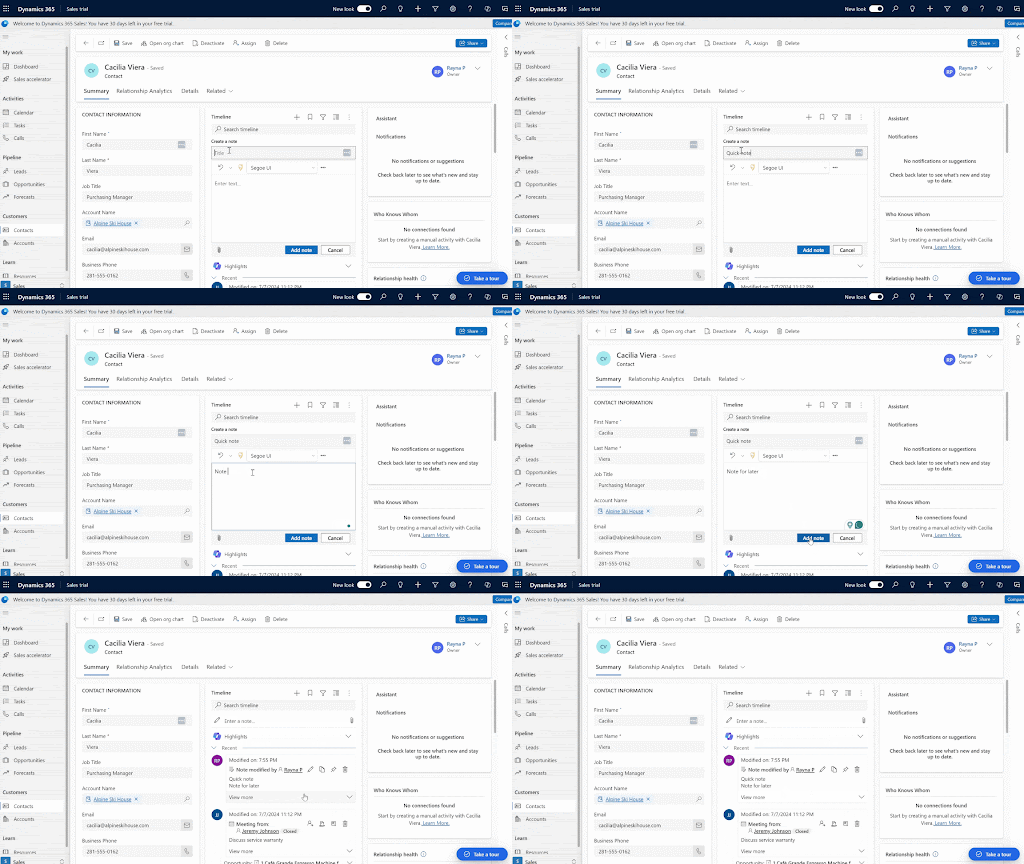
View of a user leaving a note on a sample contact profile in Microsoft Dynamics 365 Sales.
Beyond the individual contact profiles, we easily accessed quick insights into the overall contact list. For instance, we generated a chart showing where contacts were located by city. With just a few clicks, we could see that most sample contacts were listed in Houston. We can imagine plenty of use cases for these quick charts, and this functionality uniquely sets it apart compared to other CRMs we’ve tested.
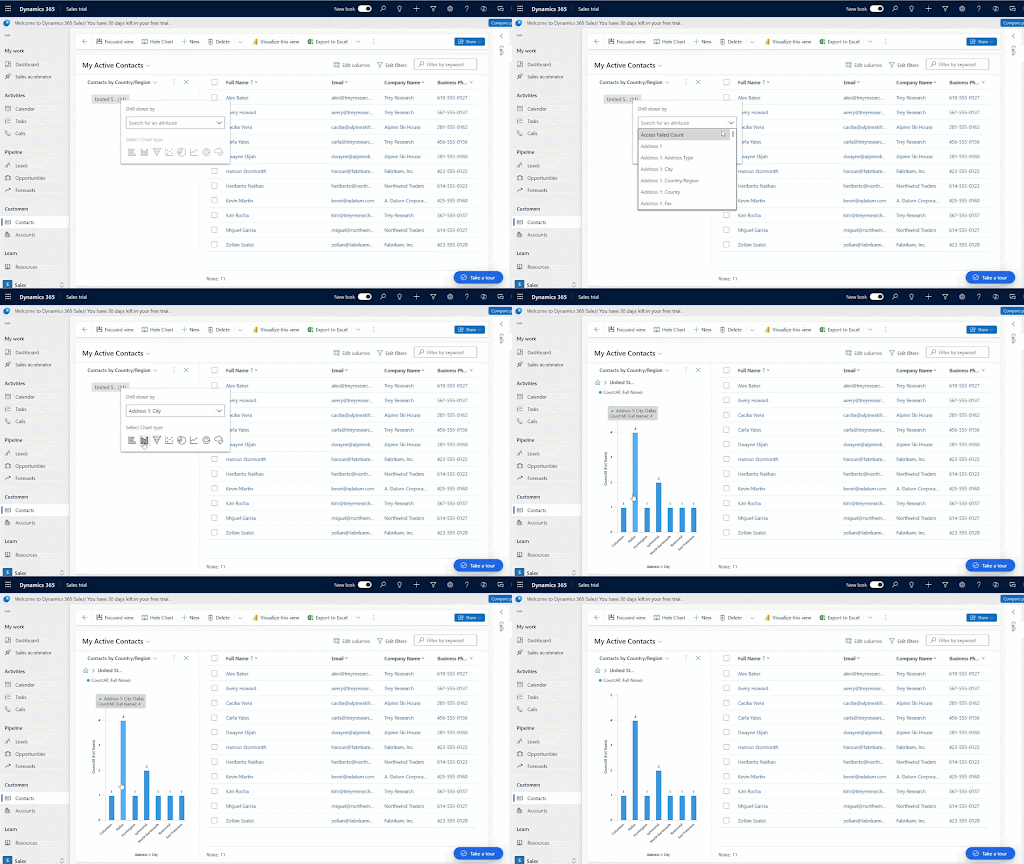
View of a chart being created based on contacts’ cities in the Active Contacts list in Microsoft
Call Transcription and Sentiment Analysis
Another feature that stood out was the sentiment analysis feature included in the call summary. This tool can detect when customers use words related to positive or negative sentiment in a call transcript. For instance, in the sample transcript of a sales call about coffee machines, the customer asked, “What makes yours better?” when comparing the product to other competitors. The system labeled this remark red and highlighted it as a negative sentiment.

These insights could be invaluable for teams that spend most of their time communicating with customers over the phone. This is especially true when reviewing previous calls to determine customers’ needs. We also noticed that certain words or phrases like “more expensive” were not highlighted as having a negative sentiment in the tool, which surprised us. It was challenging to get a sense of how the tool determined sentiment from the transcript, but it’s still beneficial if advanced phone call features are something your team could benefit from.
Microsoft Copilot AI
Copilot AI is Microsoft’s main AI product. It’s marketed as an AI-powered assistant that users can chat with using natural language to get insights and answers to questions while working.
When testing this tool, we found that Copilot feels experimental and is still unrefined in many ways. For instance, the automatically generated summaries for leads were useful as at-a-glance reminders that would make great refreshers before a sales call or meeting.
Beyond this, Copilot could be slow to load and often did not understand natural language requests. Considering it was launched last year, it’s likely to improve over time. We still think it’s a quality AI tool for teams looking to streamline their CRM usage.

Microsoft Copilot provides a summary of an open opportunity.
Microsoft Dynamics 365 Customer Service
While we wouldn’t consider the Dynamics 365 Customer Service platform a CRM solution on its own, it’s a useful addition that can round out any team’s customer experience strategy. If you’re looking to integrate CRM and customer support software into your daily workflow, you’ll need licenses for both the Sales and Customer Service products.
The Customer Service platform primarily covers case management and knowledge management for customer service teams, while the Sales product will include most sales or CRM-focused features.
Microsoft Dynamics 365 Business Central
The Microsoft Dynamics 365 Business Central product is designed for small and medium-sized businesses. It offers a sampling of Microsoft Dynamics features across products. The product includes some of the CRM essentials found in the Dynamics 365 Sales product, in addition to project management, supply chain logistics and finance tools.
While not a straightforward CRM solution, the Business Central product combines some of Microsoft Dynamics sales features with a broader range of business tools. It reminds us of similarly “bundled” product offerings like Salesforce’s Starter Suite and HubSpot’s Customer Platform, though it’s still missing comprehensive marketing features.
Microsoft Dynamics Integrations
Microsoft Dynamics 365 works with nearly all Microsoft 365 software, including Microsoft Teams and the Office Suite. Teams can integrate Dynamics 365 with outside software, although options are limited. Competitor software like Gmail and Google Calendar won’t have native integrations. We are also surprised that Zapier integration is not an option for Dynamics 365.
The Microsoft AppSource library makes it easy to search for specific CRM integrations if you have specific apps you want to connect.
| Platform | Salesforce Sales Cloud | Microsoft Dynamics 365 Sales |
| Gmail | ✅ | ❌ |
| Google Calendar | ✅ | ❌ |
| Mailchimp | ✅ | ✅ |
| Facebook Ads | ✅ | ✅ |
| Zoom | ✅ | ✅ |
| Slack | ✅ | ✅ |
| Sprout Social | ✅ | ✅ |
| Shopify | ✅ | ✅ |
| Stripe | ✅ | ✅ |
| PandaDoc | ✅ | ✅ |
| DocuSign | ✅ | ✅ |
| Five9 | ✅ | ✅ |
| Trello | ✅ | ❌ |
| Asana | ✅ | ❌ |
| Zapier | ✅ | ❌ |
Where Microsoft CRM Software Falls Short
While the Microsoft Dynamics CRM does have plenty to offer, there are many things to keep in mind if you’re considering it for your team. If you’re not already using Microsoft software, implementing it may be tricky as part of your day-to-day. And even if your team already uses Microsoft 365, the Dynamics platform still lacks some key marketing functionality.
Not Ideal for Non-Microsoft Users
Microsoft Dynamics is very well integrated with other Microsoft products, so much so that it’s hard to imagine teams getting enough value from the platform if they’re not already a Microsoft customer. Integrating with outside tools is not impossible, but it’s definitely more challenging. If your business uses Zoom and Google Calendar, you’ll need to switch to Microsoft Teams and Outlook Calendar to make life easier while using Dynamics 365 for CRM.
Limited Marketing Offerings
While top competitors like Salesforce and HubSpot offer dedicated marketing software, Microsoft does not provide a marketing product. The Microsoft Dynamics Customer Insight platform can help boost customer profiles with behavioral data and audience segmentation, which can help streamline marketing automation. But it’s missing functionality for email marketing, social media advertising campaigns and testing. Microsoft Dynamics may not be the best choice if you’re looking for an all-in-one marketing solution for managing customer journeys.
Higher Starting Costs
Regarding starter plans, you’ll notice that Microsoft Dynamics has a higher price tag than many competitors. The Sales product starts at $65 per month per user, double (or triple) the starting cost of competitors like Salesforce or Pipedrive. Budget-friendly options like Zoho CRM offer pricing that caps out at $65 per month by comparison. These higher costs are something to keep in mind, especially for large enterprises. Even if you’re not looking for advanced plans, your monthly costs may be higher than other CRM solutions.
Microsoft Dynamics 365 Sales Pricing
Microsoft Dynamics 365 Sales is offered in three major plans, with a Relationships Sales option as a variation of the Enterprise plan.
| Plan | Professional | Enterprise | Premium | Relationships Sales |
| Price (/user/month) | $65 | $95 | $135 | Variable |
| Automation | ✅ | ✅ | ✅ | ✅ |
| Reporting and Dashboards | ✅ | ✅ | ✅ | ✅ |
| AI Copilot | ❌ | ✅ | ✅ | ✅ |
| Advanced Sales Engagement | ❌ | ❌ | ✅ | ❌ |
| LinkedIn Sales Navigator | ❌ | ❌ | ❌ | ✅ |
Microsoft Dynamics 365 Sales Professional Plan
The Professional plan offers the lowest price per user and the most limited set of features out of all plan options. It’s missing the AI Copilot functionality and advanced sales engagement features, but it still offers the bulk of Microsoft Dynamic’s CRM functionality, such as contact and opportunity management. It’s still a solid choice if you’re on a budget and don’t need extras like AI.
Microsoft Dynamics 365 Sales Enterprise Plan
The Enterprise plan offers more features than the Professional plan, including the AI Copilot for the Dynamics 365 Sales product. It lacks the same advanced sales features as the Professional plan. Still, if you’re interested in Dynamics 365 specifically for the AI Copilot functionality, it’s an affordable choice that can get you access to those features.
Microsoft Dynamics 365 Sales Premium Plan
The Premium plan is for teams that need advanced sales engagement features like predictive forecasting. This is the only plan offering this functionality, making it the top choice for teams that want access to all the Dynamics 365 Sales features. The Relationship Sales plan builds on the Enterprise plan (not the Premium plan) and won’t include the same advanced sales features.
Microsoft Dynamics 365 Sales Relationship Sales Plan
The Sales Relationship plan includes the same feature set as the Enterprise plan with the addition of LinkedIn Sales Navigator, which teams can use to generate and manage leads from LinkedIn’s network. It also requires a minimum of 10 seats, so it’s best suited to larger businesses. Beyond this, it offers the same functionality as the Enterprise plan, though pricing is custom. Teams will need to contact a Microsoft sales representative to get insight into how much this plan will cost.
Alternatives to Microsoft Dynamics
Some of Microsoft Dynamics 365’s top competitors are Salesforce and Pipedrive. Salesforce is a similarly comprehensive provider offering different software solutions, while Pipedrive specializes in sales CRM. These three options include similar feature sets, though CRM pricing can vary widely, especially for more advanced plans.
When we surveyed CRM users, respondents highlighted workflow automation and contact activity tracking as the most important key features. We used insights like these to evaluate tools and compare feature availability.

How Microsoft Stacks Up to the Competition
Based on price range and features, we compared Salesforce’s Sales Cloud and the Microsoft 365 Sales platform to Pipedrive. Although all three providers are closely matched regarding pricing and features, Salesforce had the most to offer regarding proper sales CRM functionality.
Aside from the higher starting price, Dynamics 365 falls behind because it doesn’t include much native marketing functionality. Even without Salesforce Marketing Cloud, Sales Cloud users can access essential mass email tools. The same goes for Pipedrive users who select the Advanced plan or above. In our tests of these platforms, Pipedrive also stood out for its overall ease of use, which is key to streamlining any sales process with CRM software.
| Salesforce Sales Cloud | Pipedrive | Microsoft Dynamics 365 Sales | |
| Monthly Price Range | $20-$500/user | $29-$124/user | $65-$135/user |
| Contact Management | ✅ | ✅ | ✅ |
| Workflow Automation | ✅ | ✅ | ✅ |
| Lead Scoring | ✅ | ❌ | ❌ |
| Pipeline Management | ✅ | ✅ | ✅ |
| Email Marketing | ✅ | ✅ | ❌ |
| Analytics | ✅ | ✅ | ✅ |
| Custom Dashboards | ✅ | ✅ | ✅ |
| Phone Support | ✅ | ✅ | ✅ |
| Live Chat | ✅ | ✅ | ✅ |
The Bottom Line
Microsoft Dynamics 365 is a comprehensive software that works best as a CRM solution for teams already using Microsoft 365 software such as Outlook, Excel and Teams. When we tested Dynamics 365 Sales, its contact management, sales call transcription and AI-powered features stood out, but we think it may be challenging to use the platform with non-Microsoft tools in a daily workflow. Company size can also affect team adoption. Large teams using Microsoft may pick up Dynamic 365 with a minimal learning curve. However, small business leaders should remember that there are more user-friendly business solutions for CRM, like Pipedrive, that are more efficient for sales representatives.
Our overall experience with Dynamics 365 was positive, but we suggest looking into other changes you may need to make if you’re not already using Microsoft products. Implementing a CRM can be challenging enough, so it’s vital to ensure the software you choose can support your CRM strategy while streamlining your daily workflow.
Frequently Asked Questions
Microsoft Dynamics 365 is a great CRM for sales teams already using Microsoft Office 365 software like Word, SharePoint or Teams. Using Dynamics 365 for CRM can streamline contact management using data and software that’s already a part of your daily workflow without needing outside integration with other CRM tools.
Yes. Microsoft Dynamics 365 is a CRM solution that includes sales, marketing and customer service products.
link